Science
Savannah River emergency ended after lab fire, with no detectable contamination in final surveys
The South Carolina nuclear complex lifted protective measures at 9:45 p.m. after firefighters extinguished a laboratory fire. Officials have not yet publicly explained the cause, the materials involved or a discrepancy in their timeline.
What to know
- The fire occurred at the Savannah River National Laboratory, one part of the much larger federal Savannah River Site near Aiken, South Carolina.
- The site said firefighters extinguished the fire and radiological surveys found no detectable contamination.
- Officials terminated the emergency at 9:45 p.m. on October 28, lifted protective actions and reopened barricades.
- During the response, employees in the affected area sheltered in place, incoming traffic was stopped and rail, river and air traffic in the area was restricted.
- The cause, exact affected laboratory space and materials involved had not been explained in the final public update. Reuters reported one injury, but the official final release did not confirm or discuss it.
An emergency at the Savannah River Site in South Carolina ended Wednesday night after a fire at the Savannah River National Laboratory was extinguished and radiological surveys found no detectable contamination, according to the site’s final public update. Officials terminated the emergency at 9:45 p.m. on October 28, lifted protective actions and reopened barricades. Normal shifts and work activities were expected to resume October 29.
Those findings are reassuring, but they do not answer every reasonable question. The final release did not identify the cause of the fire, describe the equipment or materials affected, or address a Reuters report that one person was injured. Official Savannah River Site bulletins also give two different times for the emergency declaration. The completed response should therefore be reported as a contained incident with no detectable contamination in the final surveys, while the remaining gaps stay clearly labeled as unknown.
What happened and when
Savannah River Site declared a Site Area Emergency as crews responded to a fire at the national laboratory. A second official release said the declaration was made at 5:39 p.m. The third and final release said it was declared at 5:07 p.m. Because both times appear in official site communications, NewsCubby is not selecting one as definitive without clarification from the agency.
The response included several precautionary measures. Employees in the affected area were told to shelter in place. Barricades stopped incoming traffic, and rail, river and air traffic in the area was restricted. South Carolina Highway 125 remained open, according to the final release. The restrictions were designed to keep people away from the incident area while emergency crews assessed the fire and checked for contamination.
The fire was reported extinguished before the emergency ended. The final official bulletin said radiological surveys found no detectable contamination. Protective actions were lifted, barricades were reopened and officials declared the emergency terminated at 9:45 p.m. CNN reported that incoming traffic had been restored at about 9:18 p.m., shortly before the formal termination.
The sequence matters. “Emergency declared” describes the response category and the potential consequences officials were preparing to manage; it does not by itself establish that radioactive material escaped. The final survey result is the relevant public evidence on contamination, and it was negative within the detection and survey scope described by the site.
What “no detectable contamination” does and does not mean
The site’s wording is specific. A result of no detectable contamination means survey instruments did not identify contamination above their detection thresholds in the areas checked. It does not mean no hazardous material was present anywhere inside the affected laboratory before or during the fire, and it does not by itself explain what burned.
That distinction is routine in technical reporting. Emergency teams first control the immediate hazard, protect workers and limit access. They then perform radiological surveys to determine whether radioactive material has spread. A negative survey supports lifting protective actions when combined with other conditions, but a complete investigation may still examine air sampling, surfaces, equipment, ventilation systems and the origin of the fire.
The final release did not specify the instruments used, the number of samples, the exact survey boundary or detection limits. Those details may appear later in an incident report. Their absence does not invalidate the result; it limits how far an outside reader can generalize from it.
This is why phrases such as “nuclear disaster” or “radiation leak” would be inaccurate based on the current record. The site reported a lab fire that triggered a serious emergency response. It also reported no detectable contamination in the completed surveys. Both facts belong in the same account.
What a Site Area Emergency means
A Site Area Emergency is an official emergency classification, not a description of a confirmed off-site release. AP reported that it is the second-highest of three Department of Energy emergency categories. The classification signals that an event has caused or could cause major failure of safety functions in a facility or could produce significant on-site consequences. It activates communication, protective measures and support that might be needed if conditions worsen.
Nuclear-safety expert Edwin Lyman of the Union of Concerned Scientists told AP that precautions were warranted if radioactive material could be involved and that the lack of off-site contamination was reassuring. His comments help explain why a forceful response and a contained outcome are not contradictory. A high-consequence site is expected to react before responders know the full scope of an event.
The restrictions around Savannah River were therefore evidence of the safety system operating under uncertainty. Sheltering employees and controlling traffic reduced exposure risk and gave crews room to work. When surveys and fire-control information supported it, officials lifted those measures.
The laboratory and the larger site are not the same thing
The Savannah River Site is a roughly 310-square-mile federal complex created during the Cold War to produce nuclear materials for U.S. weapons. Its current missions include environmental cleanup, nuclear-material management, waste treatment and support for national-security programs. The Savannah River National Laboratory conducts research and development within that larger complex.
That geography matters because a report of a fire “at a nuclear site” can suggest that a reactor, high-level waste tank or weapons-production line was burning. The official bulletins identified the location as the national laboratory. CNN reported that the laboratory focuses on research rather than large-scale production or storage. No public release reviewed by NewsCubby said a reactor or waste tank was involved.
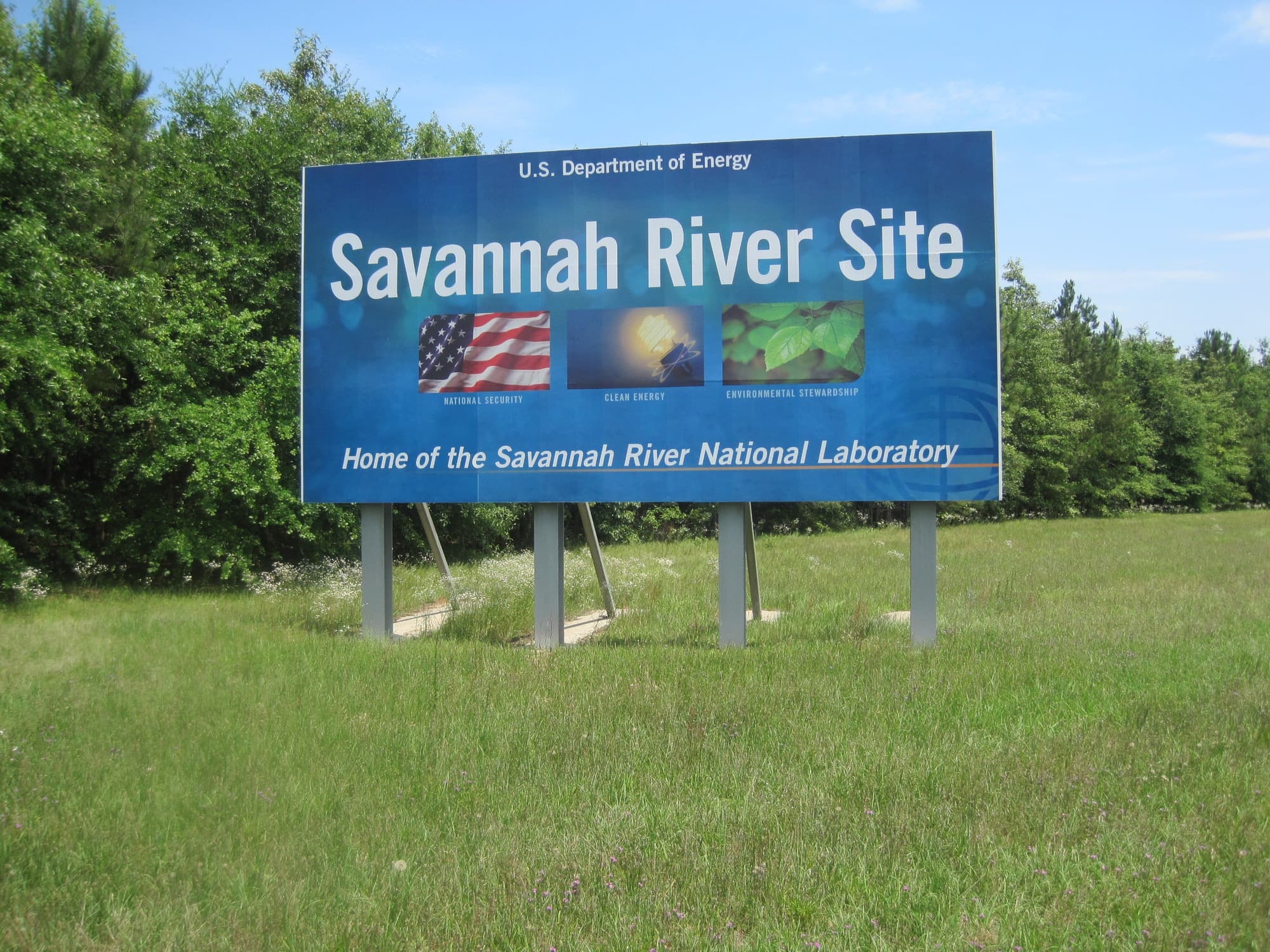
The site has a complicated history and contains facilities with very different missions and hazards. Identifying the specific facility is therefore necessary for readers to understand risk. It also prevents an archival photograph of another site area from being mistaken for the room or building affected by this fire. NewsCubby’s accompanying image is an archival view of an entrance sign and is not an image of the incident.
What remains unanswered
The first unanswered question is the cause. Officials had not said whether the fire began in electrical equipment, a research process, building systems or another source. Investigators will likely examine ignition, suppression, ventilation and whether procedures functioned as designed.
The second is what material was present in the affected space. “Laboratory” covers many possible activities. The public cannot independently assess the potential hazard without knowing the room, equipment and inventory involved. That information may be delayed while investigators preserve evidence or because some work at the site is sensitive.
The third is the status of any injury. Reuters reported that one person was injured, but the final Savannah River Site release did not mention an injury. Until an official agency, employer or medical source provides details, the severity and circumstances should not be inferred.
The fourth is the timeline discrepancy. The 32-minute difference between 5:07 p.m. and 5:39 p.m. could result from a typographical error, a distinction between an internal declaration and a public action, or another administrative detail. The site should reconcile the times because emergency timelines are important for evaluating how quickly protective actions began.
Finally, officials have not yet published a detailed after-action account. Such a report could explain how the fire was detected, when suppression began, where surveys were taken and which safeguards were credited with containing the event.
What residents and workers should watch next
The immediate protective actions are over, and the site said normal shifts and work would resume. That is the operative public guidance unless Savannah River Site or local emergency authorities issue a new notice. Residents should rely on official updates for any change rather than social-media claims that do not distinguish the fire from the broader site.
Workers may receive more specific internal instructions about access, cleanup or the affected laboratory. An end to the site-wide emergency does not necessarily mean the room where the fire occurred immediately returned to service. Investigation and repair can continue after broader restrictions are lifted.
For the public, the most useful next documents would be an incident summary, confirmation of any injury, the fire cause and survey details. Independent reporting should compare those records with the initial bulletins rather than treating the first description as the final one.
A question to keep in mind
Will the site’s follow-up report explain the fire’s cause and affected materials clearly enough for the public to understand why the emergency classification was necessary and why it was safe to end it?
---
*Want more? Explore today’s headlines on NewsCubby and join My Day free to make NewsCubby part of your day.*
*NewsCubby articles are produced with AI assistance.*
Sources, credits & editorial notes
- Savannah River Site — emergency response news release No. 3
- Savannah River Site — emergency response news release No. 2
- Associated Press — fire, contamination surveys and emergency classification
- Reuters — reported injury and response
- CNN — response timeline and laboratory context
- South Carolina Public Radio — local response reporting
- Photo — Bill Golladay, Savannah River Site sign
- Image license — CC BY-SA 4.0