World
Spain train collision: Rescue and Madrid–Andalusia disruption
Regional authorities report 68 dead and more than 100 injured near Urda. What is confirmed, what remains unknown and how rail travel is affected.
What to know
- The collision occurred on October 28 near Urda on the high-speed corridor linking Madrid with southern Spain.
- Castilla-La Mancha activated its territorial emergency plan, PLATECAM, at 9:15 a.m. local time.
- Regional emergency authorities subsequently reported a provisional 68 deaths and more than 100 injured. The figures may change as rescue and identification work continues.
- Rail traffic was suspended on the affected corridor. Travelers should check their particular service rather than assume a timetable remains valid.
- Rescue operations, a technical safety investigation and any inquiry into legal responsibility serve different purposes.
A collision involving Renfe and Iryo trains near Urda, in Spain's Toledo province, killed at least 68 people and injured more than 100, according to a provisional October 28 statement from Castilla-La Mancha's regional emergency authorities. The disaster triggered a regional emergency response and interrupted the high-speed railway between Madrid and Andalusia. The immediate priorities are rescuing passengers, treating injured people and establishing reliable information for families. Investigators have not established a final cause or responsibility.
What has been established about the collision?
Spain's infrastructure manager Adif confirmed an incident involving two trains and interruption of the Madrid–Andalusia high-speed route. Reporting by EFE and Europa Press placed the accident in the Urda area of Toledo. The affected services were operated by Renfe and Iryo, the companies that carry passengers, while Adif manages the railway infrastructure.
Europa Press reported, citing Transport Ministry sources, that initial indications pointed to a rear-end collision and derailment of two Iryo carriages. EFE also described carriages falling down an embankment. These accounts establish the seriousness of the rescue environment but do not establish the sequence of technical failures or actions that caused the impact.
Some first reports differed on train directions and the precise time. The emergency notification reported locally was shortly before 9 a.m. Spanish time. For readers comparing coverage, Spain is five hours ahead of Eastern Daylight Time on October 28, following Europe's clock change. A dispatch describing Wednesday morning in Spain is therefore describing the early hours of Wednesday in the eastern United States.
Describing a collision as an “alcance,” the Spanish term used in early accounts, does not settle responsibility. It identifies a reported kind of contact between trains. Claims about signaling, driving decisions, dispatch instructions or speed require evidence connecting those conditions to the accident. None should be assumed from the appearance of wreckage.
What is the emergency response doing?
Castilla-La Mancha's emergency service announced activation of PLATECAM at 9:15 a.m., in emergency phase and Operational Situation 1 for Toledo province. Its statement describes coordinated deployment of responders and an advanced command post. This establishes an organized regional response; it is not a statement that rescue work has finished or that the accident's full consequences are known.
The regional government identified police, firefighters, civil-protection personnel and health-service resources among the responders. It described medical assessment and transfer of injured people, alongside preparations for psychosocial support. A local sports hall was to provide initial assistance to affected people. AP subsequently reported deployment of a military emergency brigade. These are separate functions: not every person at an assistance center has been hospitalized, and not every person who needs support has a physical injury.
Triage means deciding the urgency of treatment according to a patient's condition. It should not be confused with a final accounting of injuries. The number of people initially assessed, the number transported and the number admitted to hospitals can differ because they measure different stages. Adding such figures together would risk counting the same person more than once.
Families need authenticated information rather than public speculation about passenger identities. A person's failure to answer a phone does not establish that the person was aboard, injured or missing. Tickets, a service number and the operator's instructions are more useful for an inquiry than an unverified list shared online. No passenger identities are necessary to explain this developing emergency.
How should the casualty figures be understood?
The regional emergency service's October 28 update gives a provisional toll of 68 deaths and more than 100 injured. Europa Press separately attributes the official death toll of 68 to regional president Emiliano García-Page in a report updated at 4:28 p.m. in Spain, or 11:28 a.m. Eastern. Earlier accounts, including an AP dispatch citing EFE and local media, reported at least 30 deaths. That earlier number has been superseded; it is not the current toll used in this article.
The distinction matters for relatives and for the public record. A rising preliminary number can reflect additional confirmation during rescue work. It does not, without further evidence, show that officials deliberately concealed a total or that every earlier report was fabricated. Equally, an early confirmed minimum should not be advertised as the final scale of the tragedy.
García-Page also reported 15 people in very serious condition, according to Europa Press. The regional statement's broader count of injured people is provisional, and it should not be added to separate hospital or triage figures. Those descriptions can cover overlapping groups. This article does not assign a definitive number to people still requiring rescue or infer that the casualty accounting is complete.
Have American passengers been confirmed?
As of this update, NewsCubby has not verified that U.S. citizens were aboard either train, injured or killed. That remains unconfirmed; it does not establish that no Americans were affected. Passenger nationality and casualty status require separate confirmation from the relevant authorities. Unverified claims about Americans should not be presented as established facts or used to identify passengers.
What does the interruption mean for passengers?
The affected line is a high-speed connection between Madrid and Andalusia, rather than every railway in Spain. A suspension on that corridor can affect multiple destinations and operators sharing its infrastructure. The presence of a ticket in a booking application is not, on its own, confirmation that the train will operate after an emergency closure.
Passengers should retain their booking confirmation and check updates from the company responsible for their service. If a replacement journey is offered, the important details are its departure location, departure time, final destination and whether an existing connection remains possible. A substitute arrangement should not be assumed to cover an unrelated separately purchased journey.
The European Union's public passenger guidance explains that qualifying cancellations or long delays can create choices between reimbursement and continuing a journey under comparable conditions. Assistance and rerouting are distinct from additional compensation, which has its own conditions and exceptions. An accident does not automatically make every separately incurred expense reimbursable.
For that reason, passengers should preserve receipts and the operator's written instructions before making a claim. They should also establish whether a proposed alternative has been authorized rather than assume that any flight, rental vehicle or hotel purchase will be covered. The available guidance explains general rights; it does not decide an individual traveler's claim or the cause of this accident.
How will investigators determine what happened?
Spain's legal framework separates technical accident investigation from the determination of blame. The purpose of a safety investigation is to establish causes and make recommendations that can prevent another accident. That work is different from a judicial inquiry into possible legal responsibility, even when the same underlying events are relevant to both.
The distinction helps explain why the first official response focuses on rescue and service protection rather than an immediate public verdict. Establishing the order of events requires records and physical evidence. A photograph can show damage at a particular moment; it cannot by itself establish what instructions were issued earlier, which systems were functioning or how crews responded.
Adif's infrastructure role, the operators' passenger-service responsibilities and the emergency services' rescue duties should therefore be kept separate. Identifying who operates a train does not establish who caused a collision. Nor does identifying an infrastructure manager establish that a track or signaling defect occurred. Those are questions for evidence, not assumptions based on organizational names.
This October 28 accident near Urda must also be distinguished from the January 2026 disaster at Adamuz, in Córdoba. Images, casualty totals and preliminary findings from an earlier collision cannot be transferred to this event. An older investigation may supply context about safety procedures, but it does not establish the cause of a new accident at a different location.
What comes next?
The most consequential updates will concern rescue progress, a reconciled official casualty account, assistance for families and a verified operating plan for disrupted rail services. Technical findings will take a different course. A reopening estimate, if one is announced, should be identified as an estimate until the infrastructure manager and operators confirm actual service conditions.
For travelers, the practical question is whether their specific journey is operating and what assistance is available. For the broader public, the unanswered question is how this collision occurred and what evidence can prevent another. Neither question is served by circulating graphic images, identifying passengers without confirmation or declaring a cause before investigators have established one.
Follow NewsCubby for verified developments and clear explanations of major international news. A free account lets you organize the topics you follow in My Day.
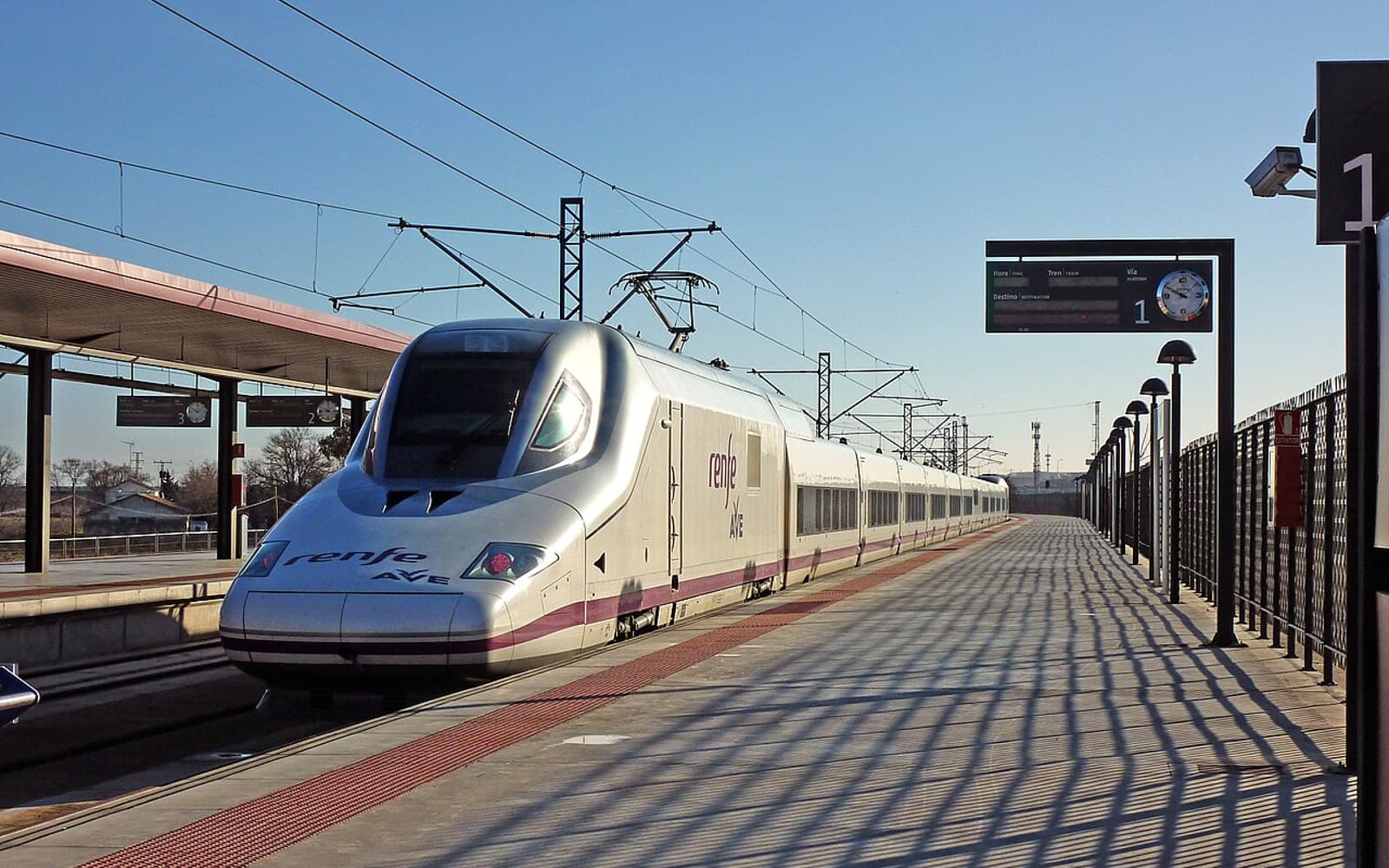
*ARCHIVE PHOTO: An AVE train at Toledo station in Spain in an archive photograph; not the train or site of the Urda collision. Capture date: 2011-02-14. Photo: Adbar / Wikimedia Commons / CC BY-SA 3.0 (https://creativecommons.org/licenses/by-sa/3.0). Resized/cropped; cards add typography and gradient. Adaptations retain the source license. No endorsement implied.*
*Prepared with AI assistance for NewsCubby.*
Sources, credits & editorial notes
- Castilla-La Mancha112: PLATECAM emergency activation and response
- Europa Press: Regional spokesperson confirms initial10deaths and warns increase
- Europa Press: Ministry account of collision and derailment
- EFE: Urda collision and emergency-service reporting
- Adif: Official network operating status
- RTVE: Adif suspends Madrid–Andalusia high-speed traffic
- Reuters: October28Spain train collision, syndicated report
- Spain Official Gazette: Technical accident investigation purpose, Law2/2024
- European Commission: Current rail passenger rights
- European Commission: Rail passenger rights regulatory framework
- AP via WRAL: Updated Urda collision report, EFE/local-media toll at least30
- Castilla-La Mancha 112: Provisional toll of 68 deaths and more than 100 injured
- Europa Press: García-Page reports 68 dead and 15 very seriously injured
- Renfe: Official statement on the Los Yébenes–Urda collision
- Photo: Adbar; CC BY-SA 3.0