Politics
Trump opens door to immigration deal after deportation criticism
His 60 Minutes comments signal possible negotiations. They do not establish new protections, eligibility rules or an enacted agreement.
What to know
- Trump discussed a possible agreement covering some longtime residents who work in the United States.
- The interview aired November 8 after being recorded November 6.
- The reporting reviewed for this article does not establish a completed deal or an announced application program.
- Immigration enforcement priorities, permission to work and permanent legal status are separate questions.
- Written proposals, agency instructions and congressional action will show whether the remarks produce a practical change.
President Donald Trump raised the prospect of an immigration agreement with Democrats in a 60 Minutes interview broadcast Sunday, November 8, while acknowledging that his administration's deportation approach may have been too severe. The comments invite a consequential question: what would have to happen before a political opening becomes a policy people can actually use?
The Associated Press reports that Trump offered no detailed agreement. CNN likewise reported that any change to enforcement remained unclear. For families, employers and lawmakers, that gap is the immediate story. A willingness to negotiate can start a debate, but a workable proposal needs defined eligibility, a legal mechanism and instructions for the agencies responsible for carrying it out.
What did Trump actually put on the table?
Trump's comments concerned the treatment of established workers alongside continued enforcement against people he described as dangerous offenders. His discussion suggested openness to negotiations over some residents' ability to stay, without setting out a new category of immigration status.
That distinction is central to an accurate account of the interview. The president expressed an interest in an outcome. He did not provide the rules needed to determine who would qualify, how an application would be judged or when a change would begin. Readers should therefore understand the development as an opening for possible talks rather than a completed immigration agreement.
The primary record is CBS's published interview transcript. AP and CNN separately reported on the remarks, but both accounts draw on that same interview for what Trump said. Their coverage adds reporting and political context; it does not turn the president's statements into independently verified evidence that negotiations have already produced terms.
Why does the timing matter?
The comments come after Democrats won control of both chambers of Congress in the midterm elections, according to AP. The transfer of congressional power occurs with the new terms, rather than on election night. Under the 20th Amendment, the terms of senators and representatives begin at noon on January 3.
That creates a transition period with two separate questions: what the current administration does under existing authority, and what the next Congress is willing to put into legislation. An agency instruction could concern present-day enforcement. A congressional proposal would follow a legislative path and depend on its own text and votes.
NewsCubby's earlier reporting on Democratic control of Congress explains the broader shift. The immigration interview adds a distinct development: Trump's public willingness to discuss an agreement. It does not settle what either party would accept.
What would a legislative agreement require?
The Constitution places legislative power in Congress and requires bills passed by the House and Senate to be presented to the president. A public statement supporting a general idea is several steps removed from that process.
For an immigration proposal, the practical starting point would be its text. Lawmakers would need to identify the group covered, specify the benefit or protection and explain how the measure interacts with existing law. A proposal might also include funding, application procedures, documentation requirements or deadlines. Those are questions to examine in any future bill, not terms announced in this interview.
The two chambers would need to agree on the same legislation before it could be presented for presidential approval. If the president vetoed it, the Constitution provides a route to override that veto with two-thirds support in each chamber. Party control alone therefore does not establish that a particular immigration measure will become law.
Even enactment and implementation are different milestones. A statute may direct agencies to create forms or regulations and may set an effective date. The relevant dates and instructions would determine when people could act. Reporting a bill's introduction, passage or signature as though all three had happened would obscure the stage the proposal had actually reached.
Could enforcement change without a new law?
Federal law gives the Department of Homeland Security responsibility for administering and enforcing much of the immigration system, while reserving specified functions to other officials and agencies. Section 1103 of Title 8 authorizes regulations and instructions to carry out that responsibility.
That is why an enforcement policy and a legislative agreement should be assessed separately. An administration may issue instructions within its lawful authority about how agencies perform their duties. The precise legal basis, scope and limits of any particular instruction would still matter, and could become the subject of litigation.
An instruction about which cases receive attention does not automatically supply the legal benefits of a newly created immigration category. Nor does a change in political language establish that officers have received new guidance. Evidence of an operational change would include the actual directive, who issued it, its effective date and which agencies it covers.
This is also distinct from the local-policy changes described in NewsCubby's report on Houston's limits on police cooperation with ICE. Local cooperation rules, federal enforcement decisions and eligibility for immigration status operate through different authorities. One should not be used as a substitute for evidence about another.
Why are the words “legal status” important?
The phrase can conceal major differences unless a proposal defines it. Permission to remain temporarily, authorization to work and lawful permanent residence are not interchangeable descriptions. A future agreement would need to specify the actual legal benefit it creates or changes.
Existing adjustment-of-status law illustrates the importance of detail. Section 1255 of Title 8 sets conditions concerning applications, visa eligibility, admissibility and visa availability, along with exceptions and restrictions. It is not a general promise that employment or a certain number of years in the country automatically produces permanent residence.
Those provisions are background, not a prediction about the terms of a future agreement. Without a concrete proposal, it would be misleading to tell readers that a particular occupation, tax history or arrival date will qualify them. The interview did not establish an application fee, a form, a filing window or an implementing agency for a new program.
People with individual immigration questions should seek advice from a qualified immigration attorney or an accredited representative familiar with their circumstances. A news report about negotiations cannot determine a person's eligibility or replace advice about an existing case.
How does the White House staffing change fit?
The interview was recorded before Trump announced Stephen Miller's promotion to chief of staff, AP reported. Miller has been closely associated with the administration's immigration agenda. CNN noted the tension between the president's remarks and the promotion of a central figure in that agenda.
NewsCubby has separately covered Miller's appointment and the transition from Susie Wiles. The staffing decision is relevant context because it concerns who helps organize work around the president. It does not, by itself, prove either that a deal will happen or that it is impossible.
The same standard applies to reactions from lawmakers. Support for talks is evidence of a political position. A specific negotiated proposal, supported by identifiable participants and accompanied by text, would be stronger evidence of progress. The distinction leaves room to report genuine movement without treating optimism or skepticism as an outcome.
What should readers watch next?
The most useful next developments would answer concrete questions. Is there a written proposal? Which officials and lawmakers support it? Does it change enforcement instructions, create a benefit through legislation or combine several measures? Who is covered, and what remains unchanged?
The official record should also establish timing. An announcement date, a congressional vote and the opening of an application process may be different days. Any eventual package should be evaluated against the rules in force at the time, rather than expectations created by an interview.
For now, Trump has signaled an interest in an immigration agreement while reassessing the political effect of deportations. The substantive test is what follows: documented terms, lawful action and clear implementation. Until those details exist, the interview is news about a possible change in direction, not a new immigration program.
Want more? Explore today's headlines on NewsCubby and join My Day free to make NewsCubby part of your day.
This article was produced with AI assistance.
Reporting Sources
Photo & Video Credits
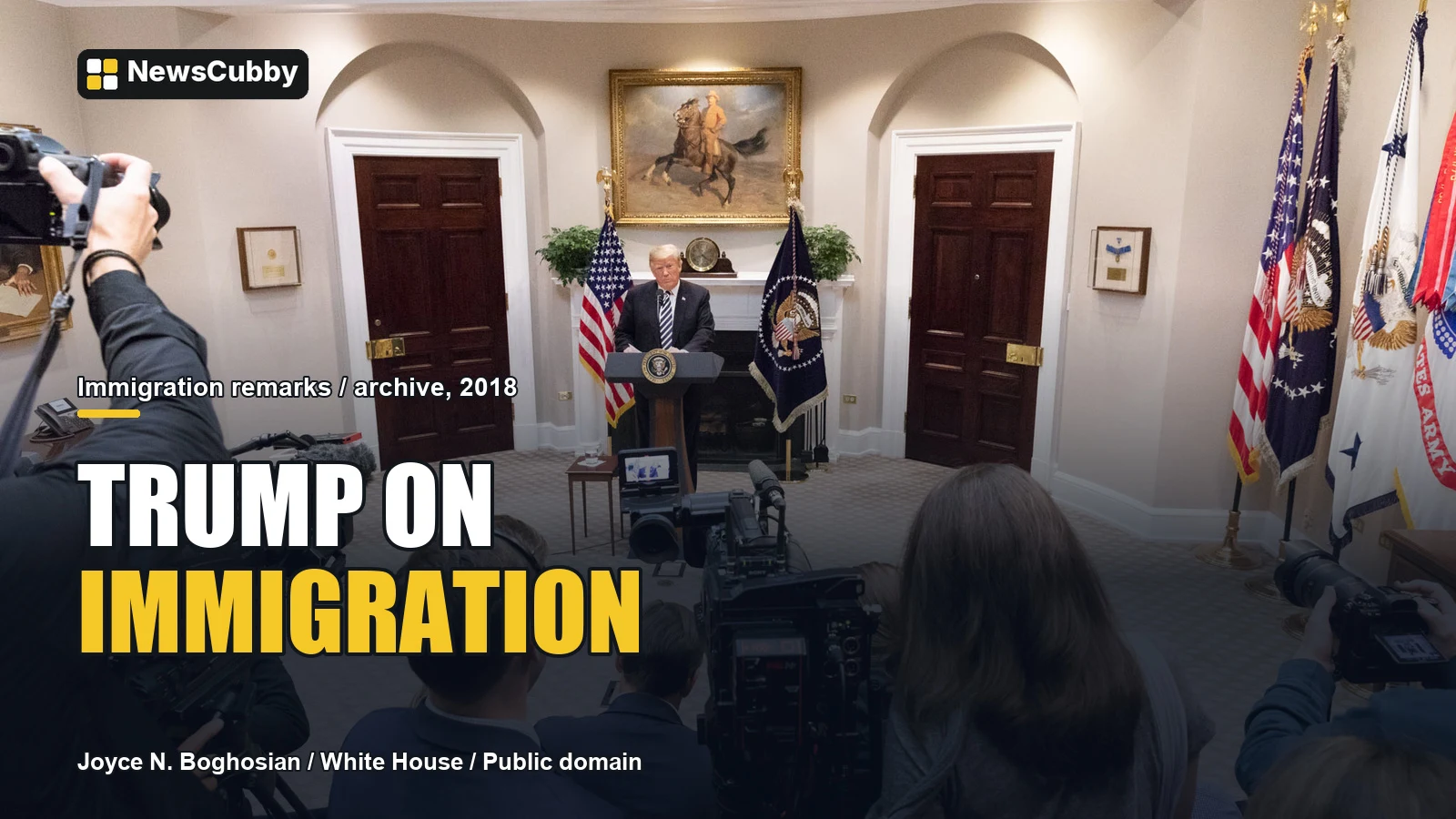
Credit: Joyce N. Boghosian / White House. License: Public domain — U.S. federal government work. Source: file page.
Editorial notes
Sources
CBS News: November 8 interview transcript
Associated Press, Mike Catalini: November 8 report, authorized News4Jax republication
CNN, Kevin Liptak: November 8 report, ABC17 republication
National Archives: Constitution, Article I, Section 7
https://www.archives.gov/founding-docs/constitution-transcript
National Archives: 20th Amendment
https://www.archives.gov/founding-docs/amendments-11-27
8 U.S.C. § 1103: immigration administration and enforcement responsibilities
https://www.law.cornell.edu/uscode/text/8/1103
8 U.S.C. § 1255: adjustment of status
https://www.law.cornell.edu/uscode/text/8/1255
Photo and video credits
All four images are archival and do not show the November 2026 interview. No government endorsement is implied. Source records identify these as U.S. federal-government works, public domain in the United States. NewsCubby adds cropping, resizing, motion, captions, its logo and readability shading. - Vertical cover and video: Donald Trump's official presidential portrait, June 2, 2025. Daniel Torok / White House. Source and public-domain record.jpg). - Wide article thumbnail and video: Trump delivering remarks on immigration and border security at the White House, November 1, 2018. Joyce N. Boghosian / White House. Source and public-domain record. - Video: Stephen Miller, July 18, 2025. Daniel Torok / White House. The Commons source includes an earlier crop and color adjustment; NewsCubby adds the edits listed above. Source and public-domain record. - Video: U.S. Capitol west front, 1997. Architect of the Capitol. Illustrates Congress; does not depict current negotiations. Source and public-domain record.