Politics
Your vote, explained: what happens to your ballot after you cast it
How ballots are sealed, checked, counted, audited and certified after polls close, and the official tools to track your own ballot.
What to know
- Officials track ballots and voting equipment with logs, seals and serial numbers from the moment polls close, the EAC says.
- Mail ballots are checked before they are counted, often by comparing the signature on the envelope with the one on file.
- Provisional ballots are counted only after officials confirm the voter is eligible. Federal law requires a free way for voters to find out whether theirs was counted.
- Observers from parties and campaigns can watch the process under state rules, but they cannot touch ballots or interfere with voters in the states reviewed here.
- "Most states require a post-election audit," according to the EAC, and results become official only after they are certified.
Millions of Americans are voting in person today, Tuesday, Nov. 3, and millions more already returned mail ballots. The work of election officials does not end when polls close. According to the U.S. Election Assistance Commission, the federal agency that supports state and local election offices, "the election results reported on election night are never the final, certified results."
Elections in the United States are run by states and counties, so the details differ from place to place. This guide explains the common steps, with examples from state election offices, and shows how to look up your own ballot.
What happens to an in-person ballot when polls close?
In most places, voters mark a paper ballot or use a machine that produces a paper record. A tabulator scans the ballot and stores the totals on a memory device. Pennsylvania's voting systems produce a "voter-verifiable paper record" and are "never connected to the internet," according to the Pennsylvania Department of State. In North Carolina, all 100 counties use paper ballots, which produce a paper trail "which can be easily audited or recounted," according to the State Board of Elections.
When polls close, poll workers follow a closing checklist. The EAC's chain-of-custody guidance calls this record-keeping "essential to a transparent and trustworthy election." Its checklist includes:
Securing and verifying the memory cards.
Accounting for every memory device that holds voted ballots.
Verifying all seal and serial numbers.
Sealing ballots in the correct containers and accounting for spoiled ballots.
Delivering everything to the elections office.
The EAC's sample form tells workers not to discard any seals and to return all of them with the other materials.
Offices also keep an audit trail: the paperwork completed throughout the election. It includes logs of spoiled, provisional, challenged and unused ballots, and a detailed accounting of mailed ballots that officials use to balance totals when those ballots are counted.
How are mail ballots checked before they are counted?
A mail ballot comes back sealed in an envelope that the voter signs. In many states, officials compare that signature with the one in the voter's registration record. The EAC's guidance on signature verification describes comparing the envelope signature "with the reference image from the voter registration database." It recommends that "a bipartisan team make the decision together" before a ballot is rejected.
Many states let voters fix, or "cure," a problem. In Michigan, local clerks compare the signature on each absentee envelope with the voter's record, and voters "are given an opportunity to cure a missing or non-matching signature," according to the Michigan secretary of state. In Arizona, state law gives a voter until the fifth business day after an election that includes a federal race to fix a signature that does not match. In Texas, voters can correct certain ID problems with their mail ballot online through the secretary of state's Ballot by Mail Tracker.
Timing rules also apply. In Pennsylvania, mail ballots must reach the county elections office by 8 p.m. on Election Day. In June, the U.S. Supreme Court ruled in Watson v. Republican National Committee, allowing states to keep laws that count ballots cast by Election Day and received afterward. This year, election officials have advised voters with late mail ballots to use drop boxes or deliver them in person, The Associated Press reported, because of concerns about postmark delays.
What is a provisional ballot, and how do I know if mine counted?
A provisional ballot is a "safety net or fail safe for the voter," according to the EAC. Under Section 302 of the Help America Vote Act, a voter can cast one if their name is not on the registration list or an election official challenges their eligibility. The ballot is set aside until officials confirm the voter is eligible.
The same law requires states to "establish a free access system for voters to use to learn whether their vote was counted." Voters receive written information about that system when they cast a provisional ballot, the EAC says. Two examples:
Pennsylvania: County boards decide within seven days after the election. Voters can check status online or by calling 1-877-VOTESPA beginning seven days after the election.
Georgia: A provisional ballot counts if the voter's eligibility is confirmed within three days after Election Day, according to the secretary of state.
What can election observers do, and what can't they do?
State laws let representatives of parties and campaigns watch voting and counting, and they set limits on what those observers can do. This year the Justice Department planned its largest-ever effort to monitor polling places, and Democrats and allied groups planned an even larger one, the AP reported. The administration has said no armed federal officials would guard the polls.
Pennsylvania: Poll watchers must be registered to vote in the county where they serve and must have county credentials. Only one watcher per candidate or party may be inside a polling place at a time. They must stay outside the enclosed voting area and "are not permitted to approach voters," according to the state.
Michigan: Challengers may observe "from a reasonable distance" but may not speak with voters or touch ballots. They may communicate only with a designated challenger liaison, according to the state's guide for challengers.
North Carolina: No more than three observers from the same party may be in a voting place at once. They may not look at or photograph a voter's marked ballot, or stand close enough to see how someone voted, according to the State Board of Elections.
How are voting machines tested and kept secure?
Before an election, officials run logic and accuracy tests to make sure equipment counts correctly. The EAC's guidance says this testing "ensures the election and voting equipment function as expected." It advises offices to give public notice and invite the media and party representatives to attend. Pennsylvania runs this testing before every election. North Carolina tests every voting machine, and its machines "may not be connected to the internet." Every polling place in North Carolina is staffed by bipartisan, trained officials, according to the State Board of Elections.
How do audits, canvassing and certification work?
After Election Day, local officials carry out the canvass, the official review of every ballot. "The purpose of the canvass is to make sure that every valid vote is included in the final results," the EAC says. The canvass covers mail, military and overseas, early, Election Day and provisional ballots. Until it is finished, "election results are unofficial." When it is done, officials issue a written statement of certification. "Only election officials provide official election results," the EAC says.
Audits test whether the equipment counted correctly. "Most states require a post-election audit," and the timing and method vary by state, the EAC says. Some examples:
Pennsylvania: Every county does a statistical recount of 2% of ballots or 2,000 ballots, whichever is fewer. The state also runs a statewide risk-limiting audit, which uses "scientifically designed procedures that use statistical methods." Both happen before results are certified, according to the state.
North Carolina: Two voting sites in every county are picked at random and counted by hand by bipartisan teams.
Georgia: Fulton County has given public notice that a risk-limiting audit for the Nov. 3 election will run from Nov. 13 to Nov. 17, according to the county's official notice.
Close races can lead to recounts. Rules differ widely. According to the AP's state-by-state guides, automatic recounts are triggered at a margin of 0.5% or less in Pennsylvania and Arizona, while Tennessee holds recounts only as part of a court challenge.
What are the key dates after Election Day?
Nov. 6: Deadline in Georgia to confirm eligibility for provisional ballots, three days after Election Day.
Fifth business day after the election: Deadline in Arizona for voters to fix a signature that does not match.
Nov. 10: Pennsylvania counties' seven-day window to decide on provisional ballots ends, and status lookups begin.
Nov. 13 to 17: Fulton County, Georgia's risk-limiting audit.
Mid-November into December: State canvass and certification deadlines, which differ by state. Check your state election office for the exact date.
Dec. 12: Louisiana runoffs for U.S. House races where no candidate won a majority today, according to the AP.
Jan. 3, 2027: The terms of the current Class II senators end, according to senate.gov. Senators elected to full terms today take office then.
How can I check my own ballot's status?
Most states offer an official online tool. Your state or county election office can direct you to the right one. The EAC's state-by-state page links to every state's election office. Official tools include:
Arizona: my.arizona.vote ballot tracker
California: Where's My Ballot?
Florida: Mail-ballot status is posted by each county's supervisor of elections. Start at the state's voter page.
Georgia: Ballot tracking on the secretary of state's My Voter Page
Michigan: Michigan Voter Information Center
New York: State voter lookup
Pennsylvania: Ballot tracking and provisional ballot search
Texas: Ballot by Mail Tracker
Wisconsin: MyVote Wisconsin, Track My Ballot
For tonight's timeline, read NewsCubby's guide to poll closing times and its overview of what is at stake in Congress. For when results usually arrive in each state, see NewsCubby's poll closing times and results timing guide.
*Want more? Explore today's headlines on NewsCubby and join My Day free to make NewsCubby part of your day.*
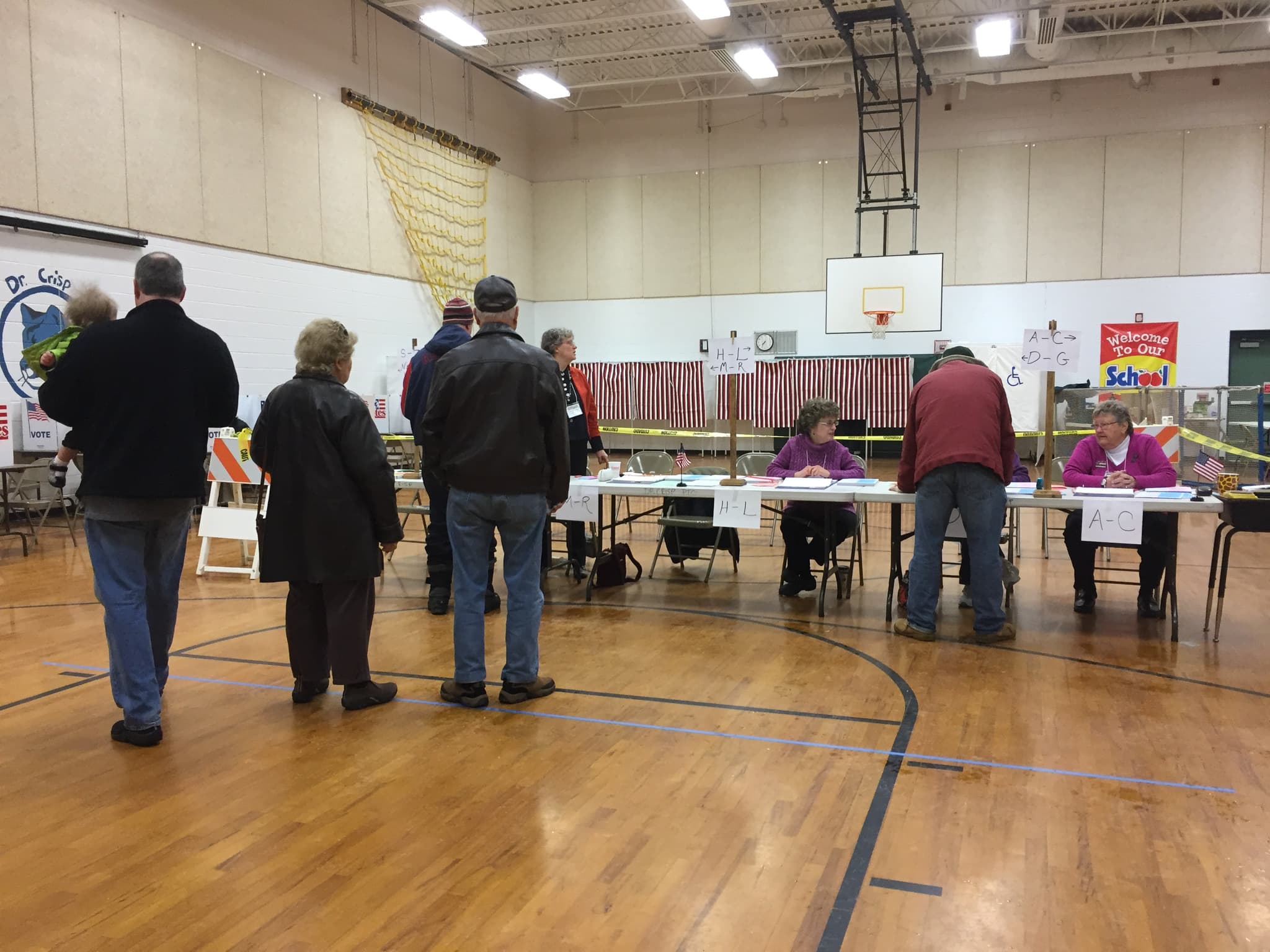
*ARCHIVE PHOTO: A polling place in Nashua, New Hampshire, Feb. 9, 2016. Not Election Day 2026. Photo: Sasha Gong / Voice of America / Wikimedia Commons / public domain.*
*NewsCubby articles are produced with AI assistance and reviewed by humans.*
Reporting Sources
- U.S. Election Assistance Commission: Election results, canvass and certification
- Pennsylvania Department of State: Election security
- Pennsylvania Department of State: Election security
- U.S. Election Assistance Commission: Chain of custody best practices
- U.S. Election Assistance Commission: Signature verification and cure process
- Michigan Secretary of State: Absentee voting
- Texas Secretary of State: Ballot by Mail Tracker
- U.S. Supreme Court docket 24-1260: Watson v. Republican National Committee
- AP: Election Day voting coverage
- U.S. Election Assistance Commission: Best practices on provisional voting
- Pennsylvania: Provisional ballot search
- Georgia Secretary of State: How-to guide for voting
- Pennsylvania Department of State: Poll watchers
- Michigan Secretary of State: Guide for election challengers and poll watchers
- Pennsylvania Department of State: Election security
- U.S. Election Assistance Commission: Logic and accuracy testing guide
- Pennsylvania Department of State: Post-election audits
- Fulton County, Ga.: Notice of risk-limiting audit
- U.S. Senate: Class II senators
Photo & Video Credits
Credit: Sasha Gong / Voice of America. License: Public domain. Source: file page.