Politics
Judge rejects federal bid to isolate 20,000 California ballots as appeal begins
A federal judge refused to order counties to segregate ballots tied to a disputed citizenship review. The ruling protects the current process while the Justice Department pursues an appeal.
What to know
- Judge Carter denied an emergency request to segregate up to 20,000 California mail ballots.
- The disputed list is based on federal allegations about possible noncitizen records; the ruling is not a finding that all listed people are eligible or ineligible.
- More than 500,000 ballots had been processed when AP reported the ruling. Processing is not the same as counting votes.
- California mails ballots to about 23 million registered voters and had received more than 3.7 million votes by the time of the hearing.
- The Justice Department said it would appeal. No later appellate order changing Carter’s ruling had been identified at the time this article was prepared.
A federal judge has denied the Trump administration’s emergency request to force California election officials to separate as many as 20,000 mail ballots while a dispute over voter eligibility moves through court. The Justice Department said it would appeal, so the legal fight is continuing. The immediate practical result is narrower: California counties may keep using their existing verification and ballot-processing procedures unless an appellate court issues a different order.
U.S. District Judge David O. Carter rejected the request for a temporary restraining order on Wednesday. His decision did not declare every person on the federal government’s disputed list eligible, and it did not decide the entire lawsuit. It concluded that the federal government had not met the demanding standard for emergency relief that would disrupt an election already underway.
The Justice Department’s complaint alleges that records associated with roughly 20,000 ballots may involve people who are not U.S. citizens. Those are government allegations, not court findings. California’s opposition filing disputes the reliability and use of the list. Associated Press, the Los Angeles Times and the Washington Post separately reported the denial and the planned appeal.
What the government asked the court to do
The federal government wanted state and county officials to identify ballots connected to a list of people it described as likely noncitizens, keep those ballots separate and prevent them from being included in the count while eligibility questions were investigated. The request arrived after voting had begun and millions of ballots had already been mailed.
That timing matters. A court considering a temporary restraining order looks at the likelihood of success, the risk of irreparable harm, the balance of harms and the public interest. Carter concluded that an order imposing a new statewide procedure in the final stage of an election would create substantial disruption and could disenfranchise qualified voters.
The judge also addressed the practical limits of California’s mail-voting system. Election workers first verify a return envelope, including the voter’s signature. The ballot is then separated from the identifying envelope to preserve secrecy. Once that separation occurs, officials generally cannot trace the anonymous ballot back to a specific voter. AP reported that more than 500,000 ballots had already reached that processing stage.
That does not mean 500,000 votes had been tabulated or added to a public result. California law allows officials to verify and prepare ballots before Election Day, but vote totals are not released until polls close. “Processed,” “counted” and “reported” describe different steps. Treating them as interchangeable would create a false picture of what the judge was asked to change.
What the list does and does not prove
The Justice Department said immigration and other federal databases produced records it believes may match people on California’s voter rolls. Its complaint describes the group as likely noncitizens. A database match is not itself a final determination of citizenship or voting eligibility. Names, birth dates, addresses and immigration histories can change or be incomplete, and U.S. citizens can appear in federal immigration records after naturalization.
California argued that the government’s data did not establish that the listed individuals were currently registered at the cited address, remained active voters or lacked citizenship. State officials reviewed a sample of 200 names drawn from 7,035 records connected to Los Angeles County addresses. According to reporting and the state’s filings, many appeared to be canceled or inactive registrations, and some records corresponded to people born in the United States.
That sample does not settle the status of every name. It does show why a disputed list should not be described as a confirmed roster of unlawful voters. The court did not conduct individual citizenship trials for 20,000 people. It ruled on whether the evidence and timing justified a sweeping emergency order.
The Justice Department has separately announced criminal cases involving alleged noncitizen voting. Charges are accusations, not convictions, and the existence of individual prosecutions does not validate every record on the civil-case list. Each claim must be evaluated on its own evidence.
Why Carter rejected emergency intervention
Carter said the requested order could “wreak havoc” on election administration. Counties would have to build a new identification and segregation process while ballots were arriving, staff were completing ordinary verification work and voters were trying to cure signature problems. The judge viewed that disruption as a serious risk to eligible citizens.
He also considered the National Voter Registration Act, which restricts systematic voter-roll maintenance within 90 days of a federal election. The federal government framed its request as ballot preservation rather than a mass removal program. California argued that the practical effect would be a late purge or eligibility challenge. Carter’s ruling found the emergency demand incompatible with federal protections and the orderly administration of the election.
The decision does not prevent election officials from enforcing existing eligibility rules. California officials may investigate specific evidence, reject ballots that fail ordinary verification and refer suspected crimes. The issue was whether a federal court should impose a new statewide segregation rule based on the record presented days before the election.
Carter also focused on voter secrecy. After an accepted ballot is removed from its envelope, forcing counties to reconstruct an individual link may be impossible or may compromise the secret ballot. Any emergency order would therefore work unevenly: some ballots might still be identifiable while others would not. That inconsistency was part of the practical harm before the court.
The appeal and what could change
The Justice Department said it was appealing immediately. That is consistent with the administration’s earlier effort to seek appellate intervention before Carter had issued a final decision on the temporary order. On October 26, the U.S. Court of Appeals for the Ninth Circuit dismissed that first attempt as premature because the district judge had not yet ruled. The Ninth Circuit’s October 26 opinion did not decide the merits of ballot segregation.
NewsCubby’s earlier report on that premature-appeal dismissal explains the procedural step that came before Carter’s merits ruling on emergency relief.
Now that Carter has ruled, the government can ask the Ninth Circuit to review the denial and can seek emergency relief while the appeal proceeds. An appellate panel could leave the ruling in place, narrow it, reverse it or issue a temporary administrative order while briefing continues. At the preparation cutoff for this article, no later appellate order changing the district court result had been verified.
An overnight appellate order could alter what counties must do. If no new order appears, Carter’s denial remains the operative ruling and ordinary state procedures continue.
The broader election context
California sends a mail ballot to every active registered voter. Approximately 23 million ballots were sent for the 2026 election, and more than 3.7 million voters had returned ballots by the time of the court fight, according to AP. Those figures provide scale: the disputed group is a small fraction of the statewide electorate, but the requested remedy could have required changes across multiple counties.
The conflict also reflects two legitimate public interests that courts must handle precisely. Government has an interest in ensuring that only eligible voters cast ballots. Citizens have an interest in avoiding wrongful disenfranchisement, keeping their ballots secret and relying on stable rules after voting begins. Accuracy requires acknowledging both interests without treating an unproven allegation as a final fact.
California Attorney General Rob Bonta described the ruling as a defense of voters and election administration. The state attorney general’s statement is an advocacy position from a party to the case, not an independent account. The Justice Department’s announcement of its lawsuit is likewise the federal government’s characterization. The court filings and the judge’s order supply the legal record; major reporting helps explain what happened at the hearing.
What voters should watch next
The next meaningful development is an order from the Ninth Circuit or a new district-court filing that changes election procedures. A notice of appeal alone does not automatically reverse Carter’s denial. County officials will continue the established process unless a court directs otherwise.
Readers should also watch the vocabulary used in future claims. “Likely noncitizen,” “matched to a federal record,” “registered voter,” “ballot returned,” “ballot processed” and “vote counted” are not synonyms. Each describes a different factual or legal step. Clear reporting should preserve those differences.
The core result as of publication preparation is straightforward: the federal government asked for emergency segregation, Carter denied it, and the Justice Department moved to appeal. The final merits of the lawsuit and the individual status of disputed records remain unresolved.
Question for readers
When an eligibility dispute emerges after voting begins, what evidence and procedural safeguards should a court require before changing ballot handling statewide?
About this article
Create a free NewsCubby account to follow the elections and public-policy topics that matter to you. Produced with AI assistance.
Sources, credits & editorial notes
- U.S. District Court: Justice Department complaint
- U.S. District Court: California opposition to temporary restraining order
- Ninth Circuit: October 26 opinion dismissing premature appeal
- Associated Press: judge denies ballot-segregation request
- Los Angeles Times: ruling and appeal
- Washington Post: judge rejects Justice Department bid
- California Attorney General: statement after ruling
- Justice Department: lawsuit announcement
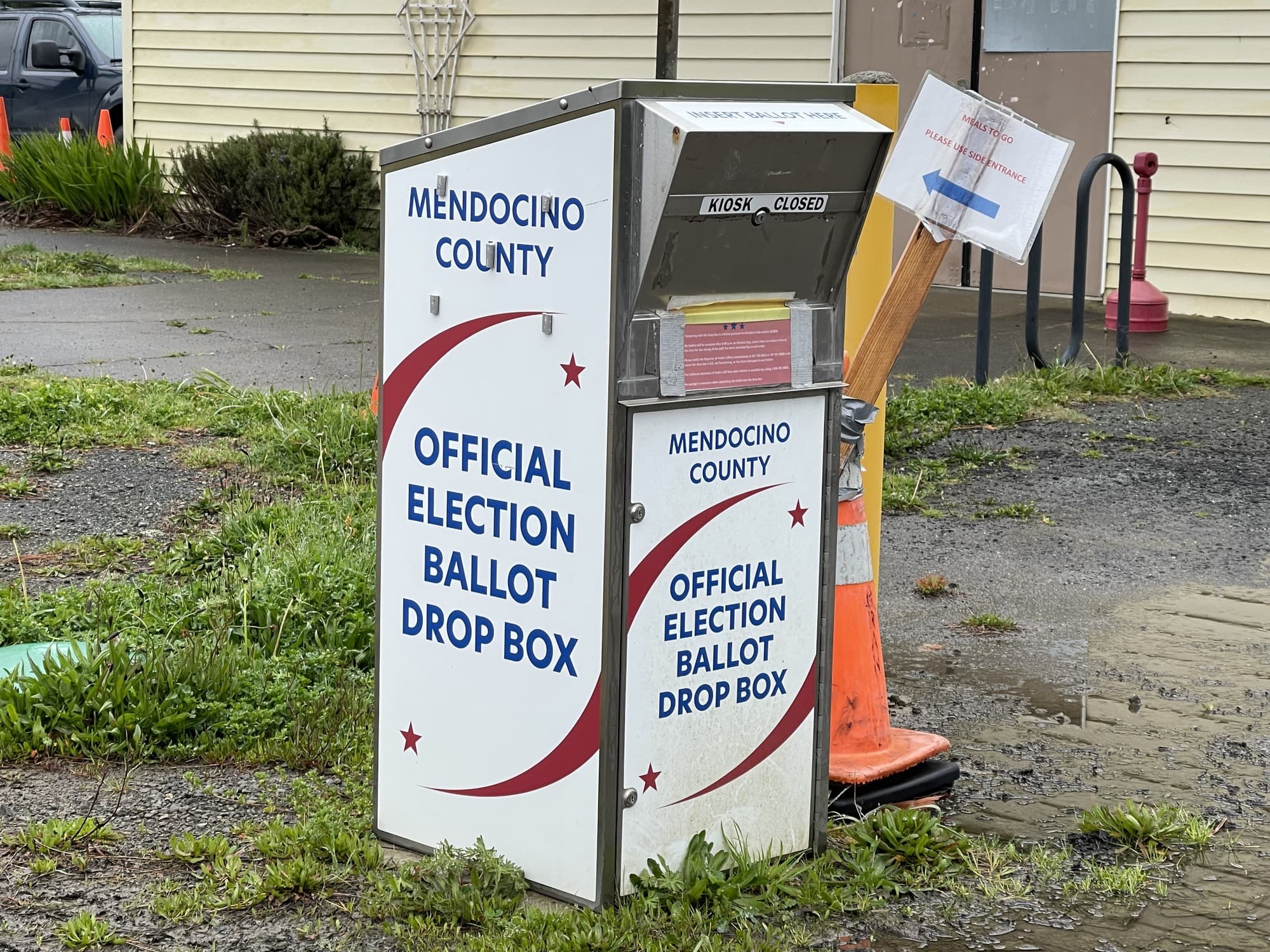
- Wikimedia Commons: Mendocino County ballot box photograph
- Creative Commons Attribution 4.0 license