Politics
James O'Keefe and Cam Higby charged: What the case says
Minnesota prosecutors allege unlawful voting and identity theft; no ballot was cast, and both men deny breaking the law.
What to know
- Hennepin County prosecutors announced felony unlawful-voting and identity-theft charges against James O'Keefe and Cam Higby on October 28, 2026.
- The criminal complaints do not accuse either man of casting a ballot; the case focuses on their alleged use of registered voters' identities while interacting with election judges.
- O'Keefe says the men were testing Minnesota's voter-vouching system as journalists, stopped before the oath and never intended to vote.
- Minnesota's unlawful-voting law covers intentionally misrepresenting one's identity while applying for a ballot, not only the act of depositing a ballot.
- MPR News reported that initial court appearances are scheduled for November 16. A charge is an accusation, and neither man has been convicted in this case.
James O'Keefe and Cam Higby were charged Wednesday with two Minnesota felonies after a hidden-camera election stunt in which prosecutors say they used registered voters' names at several Hennepin County polling places. The charges are unlawful voting and identity theft. Both allegations now have to be proved in court.
The central dispute is unusually narrow. No ballot was cast, and Hennepin County Attorney Mary Moriarty said the men did not intend to complete a vote. Prosecutors nevertheless say the men crossed a legal line when they allegedly gave election judges other voters' names and began the process of applying for ballots during Minnesota's August 11 primary. O'Keefe says he and Higby were conducting journalism, never applied for ballots and left before signing an oath or touching a ballot.
What do prosecutors allege happened?
The Hennepin County Attorney's Office said O'Keefe, 42, and Higby, 26, visited multiple precincts during the August primary and gave election judges names of people who were registered in those precincts. Prosecutors allege those names were used without the voters' knowledge or permission. The encounters were recorded and later published online as part of an effort to challenge Minnesota's election procedures.
According to the official announcement and reporting by AP, Reuters, MPR News and CBS Minnesota, poll workers found the behavior suspicious and reported it to election officials. The matter was referred for investigation. The prosecutor's office identified O'Keefe's case as 27-CR-26-28438 and Higby's as 27-CR-26-28437.
The county's language is an allegation, not a finding. The complaints begin a criminal process in which prosecutors carry the burden of proving every required element beyond a reasonable doubt. The public court record, the complete video evidence, witness testimony and any defense motions may all affect how the case develops.
The men stopped before signing the oath used in the vouching process. Moriarty also said they did not intend to vote. Those facts are central to the defense response. The prosecution's position is that Minnesota law criminalizes an earlier step: intentionally misrepresenting identity while applying for a ballot. The case may therefore turn on what the men said and did at each precinct, what election workers understood, and whether the state can prove the intent required by the charged statutes.
What is Minnesota's voter-vouching system?
Minnesota allows an eligible voter to register at a polling place on Election Day or during a primary. One way to prove residence is through a registered voter from the same precinct who vouches that the new registrant lives there. The voucher signs an oath. The person seeking registration still must provide identifying information required by the state's registration process, such as a Minnesota driver's license or identification number, or the last four digits of a Social Security number when applicable.
Vouching is a residence-verification method. It does not remove the other legal requirements for registration or voting, and it does not let a person legally assume someone else's identity. AP reported that fewer than 0.6 percent of voters in Minnesota's 2024 general election used the process. That context matters because online arguments about the video often treated vouching as if it were the state's ordinary route for most voters.
Election judges are also part of the safeguard. In this case, according to prosecutors, workers noticed behavior they considered strange and escalated it. Moriarty said that response showed the detection and referral system functioning. O'Keefe's organization reached the opposite conclusion from the encounters, arguing that the exercise exposed vulnerabilities and inconsistent responses among workers.
Readers following voting-law disputes can also review NewsCubby's explainer on a proposed $1 million voter-fraud reward, its report on New Hampshire's student-ID voting case, and its coverage of federal election-monitoring litigation.
What laws are named in the case?
Minnesota Statute 204C.14 makes it a felony to intentionally misrepresent one's identity while applying for a ballot, depositing a ballot or attempting to vote using a machine or electronic system. A separate subdivision says a signature on the polling-place roster or voter certificate is prima facie evidence of intent to vote. That does not mean a signature is the only possible evidence prosecutors may offer; it specifies one form of evidence that carries an initial legal effect.
The identity-theft statute, Minnesota Statute 609.527, generally covers transferring, possessing or using another person's identity with intent to commit, aid or abet unlawful activity. Because intent is an element, the dispute is not resolved simply by showing that a different name was spoken. Prosecutors must connect the alleged use of another identity to the unlawful purpose required by the law. The defense can contest the facts, the interpretation of the encounters, intent and the application of the statutes.
The Hennepin County news release says both men intentionally misrepresented their identities while applying for ballots even though they did not sign the oath. O'Keefe disputes the description that they applied for ballots. That difference in wording is not cosmetic: it describes the legal boundary the court may be asked to examine.
What do O'Keefe and Higby say?
In a video and written statement reported by AP, O'Keefe said he and Higby acted as investigative journalists and never intended to finish the vouching process. He said they deliberately used the phrase “the name is” instead of representing that the name was their own. He also said they walked out before touching a ballot and characterized their exchanges with election workers as hypothetical questions rather than ballot applications.
O'Keefe Media Group described the scenario as intentionally extreme and said the goal was to learn how workers would respond, what safeguards they would explain and how far the process could proceed. The group argues that the published report concerned election-system accountability and journalistic newsgathering.
Higby called the prosecution “lawfare” in a social-media response reported by the Washington Post and MPR News, denied breaking the law and sought financial support for his defense. At the time of the first reports, court records did not list an attorney for him, and neither defendant had entered a plea.
Those defenses deserve to be stated in full enough to understand the dispute. They do not by themselves resolve whether the charged conduct occurred or whether it meets the statutes. Likewise, the prosecutor's announcement does not establish guilt.
Why does the absence of a cast ballot matter?
It matters factually and legally, but it does not automatically end the case. Factually, the public should not be left with the false impression that two extra votes entered the count. The complaints, the prosecutor and the defense agree that no ballot was cast. No report reviewed for this article identified a changed vote total or a fraudulent ballot included in the primary results.
Legally, prosecutors say the charged unlawful-voting provision reaches intentional identity misrepresentation in the application stage. The defense says the men never applied and lacked an intent to vote. That makes the sequence of events important: which name was used, what was requested, what paperwork or ballot materials were offered, what was refused, and when the men left.
The episode also shows why political videos should not be treated as complete records by themselves. Editing can remove timing, questions, explanations or failed attempts. The prosecutor's evidence must be tested through court procedures, and the defense will be able to challenge it. Voters evaluating the larger policy claim should compare the published video with the actual statutes and official election rules rather than assuming either side's summary supplies the whole answer.
What remains unknown?
The publicly available reporting does not yet provide a final judicial interpretation of where “applying for a ballot” began in each encounter. It also does not establish which evidence a judge will admit, whether either defendant will seek dismissal, or whether prosecutors and the defense will reach an agreement before trial.
The identity-theft count raises additional questions about how the state will prove intent and identify any direct victims without unnecessarily exposing the registered voters whose names were allegedly used. Responsible coverage should avoid republishing those private names unless a court determines that disclosure is necessary and lawful.
No plea, verdict or sentence existed when this article was prepared. Statements made at a charging news conference or in a defense video are advocacy positions. The court record, not online reaction, will determine the legal outcome.
Why does this case matter?
The case sits where election administration, undercover media tactics and criminal law meet. Minnesota has an interest in protecting voters' identities and polling-place operations. Journalists and activists have an interest in testing public systems and publishing criticism. The legal question is how those interests apply to the specific conduct alleged here.
It also matters for public understanding ahead of an election. A video framed as proof that an election system is insecure can travel much faster than the details of residence vouching, registration checks or poll-worker referrals. A prosecution framed as punishment for journalism can spread without the statutory language or the allegations in the complaints. Both shortcuts erase facts readers need.
The most accurate description is narrower: two men who say they were conducting an investigation are accused of using other registered voters' identities while beginning a ballot process; no ballot was cast; prosecutors say the conduct still violated two felony statutes; the men deny that they applied for ballots or broke the law.
What's next?
MPR News reported that O'Keefe and Higby are scheduled for initial court appearances on November 16. At those proceedings, the court can address counsel, release conditions, pleas and future deadlines. Defense filings could clarify whether the men challenge the complaints on statutory, evidentiary or constitutional grounds.
Until then, the case should be described as pending. Any later ruling, dismissal, plea or verdict would materially change the story and should be reported as a separate verified development.
*Want more? Explore today's headlines on NewsCubby and join My Day free to make NewsCubby part of your day.*
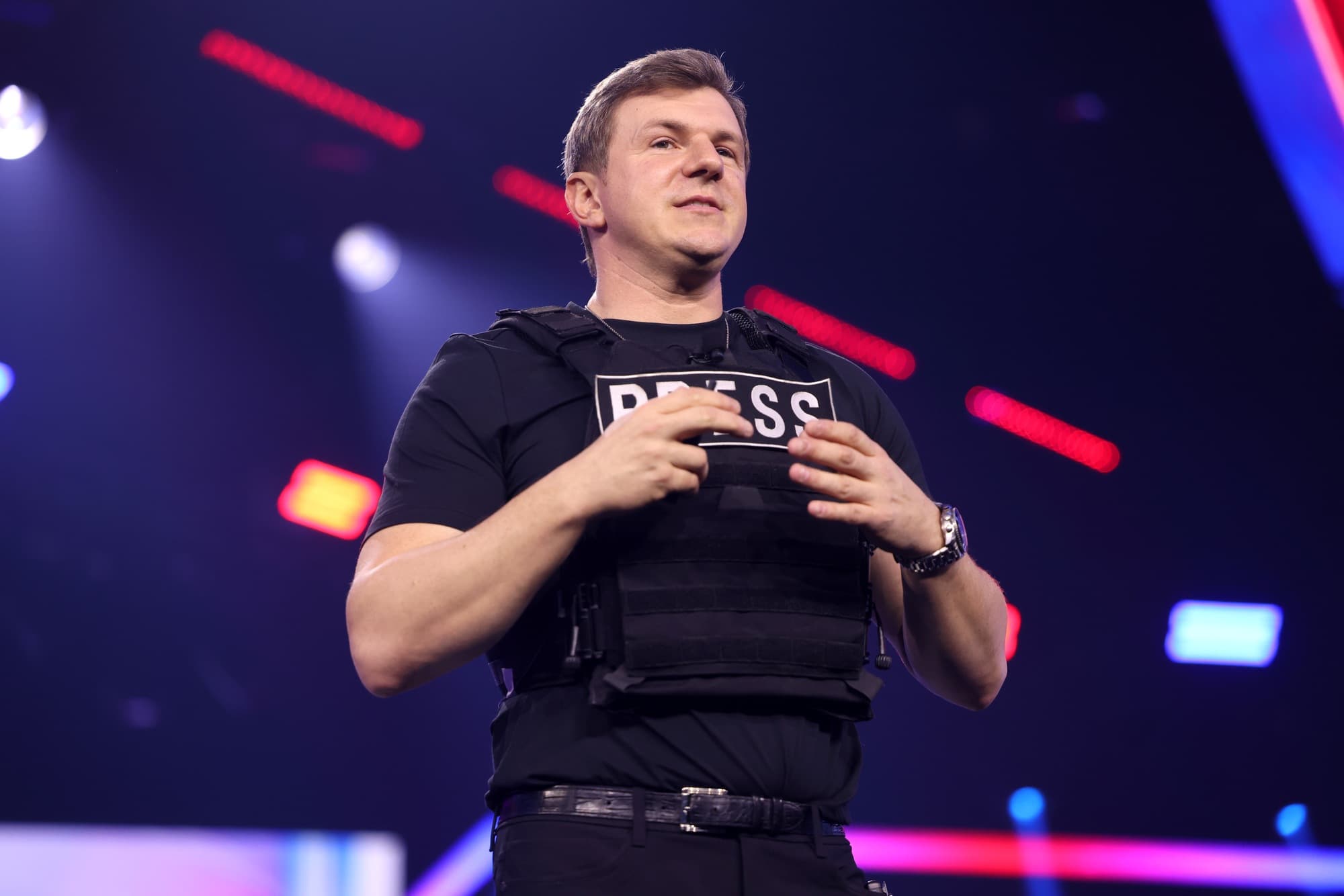
*ARCHIVE PHOTO: James O'Keefe at AmericaFest in Phoenix, Arizona, in 2024. Photo: Gage Skidmore / Wikimedia Commons / CC BY-SA 2.0.*
*This article was produced with AI assistance. Learn how NewsCubby uses AI.*
Sources, credits & editorial notes
- Hennepin County Attorney: Charges announced
- AP: O'Keefe and Higby charged in Minnesota
- Reuters: Minnesota charges O'Keefe and Higby
- MPR News: Charges and November 16 court date
- CBS Minnesota: Activists face felony charges
- Washington Post: O'Keefe charged over poll operation
- Minnesota Statute 204C.14: Unlawful voting
- Minnesota Statute 609.527: Identity theft
- Photo: Gage Skidmore / Wikimedia Commons, CC BY-SA 2.0