Politics
Harmeet Dhillon resigns as DOJ civil rights chief
Attorney General Todd Blanche accepted her resignation Thursday. The departure puts the division’s leadership and enforcement priorities in focus.
What to know
- Blanche accepted Dhillon’s resignation on November 5, 2026.
- Dhillon was confirmed by the Senate on April 3, 2025, and sworn in four days later, according to her Justice Department biography.
- Her departure follows the November 3 midterms, but the timing alone does not establish why she left.
- The office’s responsibilities continue beyond elections and include education, housing, disability rights and other civil rights enforcement.
- A leadership announcement is not a court order. It does not, by itself, resolve litigation or change the laws the division enforces.
Harmeet Dhillon has resigned as head of the Justice Department’s Civil Rights Division, with Attorney General Todd Blanche confirming Thursday, November 5, that he accepted her resignation. The Associated Press reported the announcement.
The immediate question is who will direct one of the federal government’s principal civil rights enforcement offices. The longer-term question is whether a change at the top produces changes in the investigations, lawsuits and settlements that affect voters, students, tenants, workers and people with disabilities.
What has been confirmed about her departure?
Blanche publicly thanked Dhillon for her service, according to Bloomberg Law, which first reported her planned departure. Its report also said she had previously discussed returning to private legal practice after her government service.
Her official biography lists her nomination in December 2024 and her April 2025 confirmation and swearing-in. Before joining the administration, she founded Dhillon Law Group and the Center for American Liberty. Her practice included free-speech, civil rights and election-law matters.
The accepted resignation is a personnel decision. Whether the division subsequently changes an enforcement position requires separate evidence, such as an official directive, a new filing, a settlement or a court decision. Those are the records that will show the practical effect of the transition.
Did the election results cause her resignation?
That conclusion is not established. The Washington Post reported that Dhillon’s resignation letter said she informed White House Chief of Staff Susie Wiles in early October that she intended to leave.
The chronology matters: announcing a departure after an election is different from deciding to depart because of its outcome. A report about when an official gave notice should not be turned into a claim about an undisclosed motive. Nor should uncertainty about the transition be presented as proof that other officials will follow her out.
Why does this particular job matter?
The Civil Rights Division enforces federal civil rights protections. Its work reaches disputes in which individuals may face governments, institutions or businesses with much greater resources. The office can investigate, bring cases and pursue remedies within the authority Congress has given it.
Its organization chart and work directory identify separate teams for voting, education, housing, employment, disability rights, criminal enforcement, appeals and other areas. Section chiefs oversee specialized work beneath the assistant attorney general. That structure matters because a departing leader leaves an institution with multiple responsibilities, rather than a single program that ends with one appointment.
For readers, the useful test of a leadership change is concrete: which cases are filed, which are closed, what relief is requested and what courts actually grant. Political statements can indicate priorities. They cannot substitute for those outcomes.
How had the division’s priorities changed?
Reuters described a shift toward administration priorities including gun rights and campus antisemitism. The department’s own records offer specific examples of its approach.
On September 24, the Justice Department announced the dismissal of more than 50 school-desegregation cases. It said it was reviewing cases individually and seeking dismissal when districts had achieved unitary status. Dhillon defended ending prolonged supervision as appropriate for current conditions.
That statement describes the department’s rationale. It should not be read as an independent finding that discrimination has disappeared from every school or that federal education protections have ended. Closing a particular case and repealing a law are different actions.
The department also maintains a Second Amendment Section, whose stated responsibility is protecting the gun rights of law-abiding citizens. Its presence illustrates the range of work a successor would inherit. Whether any priority changes now will have to be established through subsequent decisions, not presumed from the resignation.
What does the departure mean for election oversight?
The division coordinated the department’s November 3 operation involving approximately 1,000 monitors and observers across all 50 states, according to its Election Day announcement. DOJ described it as its largest monitoring effort and said personnel would remain available for voting-rights questions and complaints during the week.
Monitoring, litigation and election administration are distinct functions. NewsCubby’s earlier reports explain the federal monitoring plan and the department’s commitment concerning FBI and ICE personnel. Those articles document developments at the time they were published.
The division’s Voting Section enforces laws covering voting rights, voter registration, election administration and voting by military personnel and Americans overseas. Those statutory duties do not expire when the person supervising the office leaves. The resignation itself is not a finding about the validity of any ballot or result.
For the separate process of counting, auditing and certifying votes, see NewsCubby’s explanation of what happens after a ballot is cast.
What other protections fall within the division’s work?
Its education team handles federal protections against unlawful discrimination in schools and colleges, including duties concerning language barriers and disability. These responsibilities extend well beyond the admissions disputes that attract national political attention.
The Housing and Civil Enforcement Section addresses fair housing, equal access to credit, public accommodations and certain protections for religious institutions and servicemembers. The work can concern a person’s ability to rent a home, obtain financing or use a business without unlawful discrimination.
The Disability Rights Section implements the Americans with Disabilities Act through enforcement and other tools. Its responsibilities include access to state and local government programs and businesses open to the public. The Special Litigation Section addresses areas including policing and conditions in state and local institutions.
These are descriptions of jurisdiction, not promises that DOJ will take a particular complaint or win a case. They explain why decisions about leadership and staffing have consequences outside Washington’s political debates.
How can leadership affect which cases move forward?
DOJ’s published explanation of its civil-case process describes attorneys gathering evidence and preparing recommendations that move through section leadership and senior officials. Factors include the seriousness of a potential violation, available resources and whether government expertise is needed.
The guidance says investigations can last months or longer than a year, involving witness interviews, document requests and written legal recommendations. That process helps explain why the assistant attorney general’s role matters. Legal authority sets the boundaries, but resource allocation and decisions about pursuing remedies affect how the office uses that authority. A change in leadership can therefore be consequential without automatically rewriting a statute or immediately changing an existing judgment.
What we know and what remains unresolved
The resignation has been accepted. Dhillon’s service dates and the division’s statutory responsibilities are documented. Her own reported account places notice of her intention to leave before Election Day.
The sources reviewed for this article do not establish a successor, a complete handover timetable or a new enforcement plan. It would be premature to identify a replacement or say that pending cases will be abandoned. Any such development needs its own confirmation.
What happens next?
The next substantive developments to watch are an official leadership designation, any explanation of the transition and filings showing whether DOJ maintains or changes its positions in existing cases. Readers should distinguish a department announcement from an allegation in a lawsuit and from a judge’s ruling: each establishes something different.
For now, the confirmed news is a departure from a powerful enforcement post. Its lasting significance will be measured through the work of the office that remains.
*Want more? Explore today’s headlines on NewsCubby and join My Day free to make NewsCubby part of your day.*
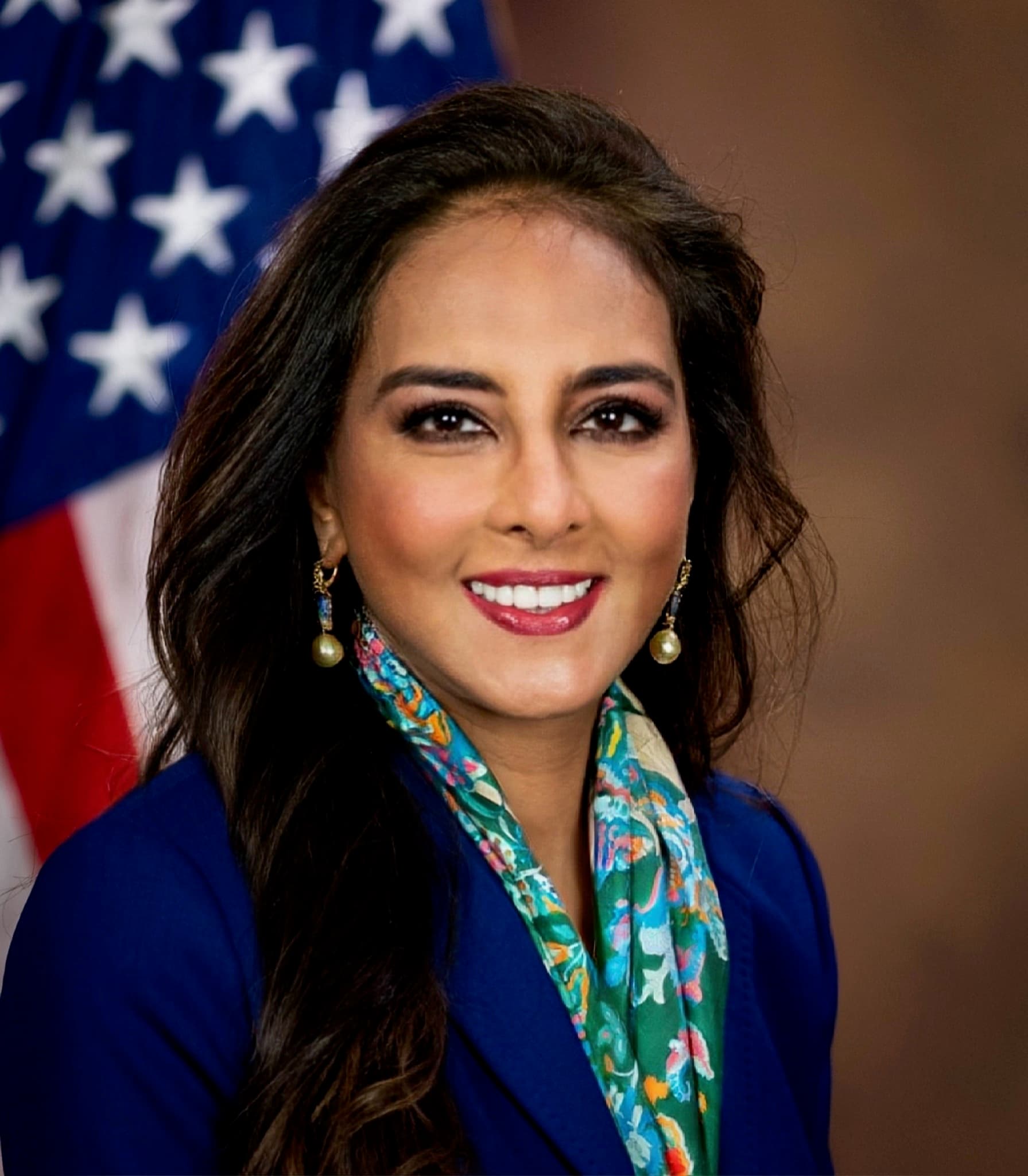
*ARCHIVE PHOTO: Official portrait of Harmeet K. Dhillon, June 2025. Photo: U.S. Department of Justice / Wikimedia Commons / public domain. Not a photograph of the resignation.*
*NewsCubby articles are produced with AI assistance and reviewed by humans.*
Video image credits
The embedded video also uses an archive photograph of Pamela Bondi and Harmeet Dhillon at Dhillon’s swearing-in on April 7, 2025. Photo: U.S. Department of Justice Office of Public Affairs / Wikimedia Commons / public domain in the United States. The photograph was proportionally resized and framed, without cropping. This is archive imagery, not footage of the resignation.
Reporting Sources
- The Associated Press
- Bloomberg Law
- official biography
- The Washington Post
- Civil Rights Division
- organization chart and work directory
- Reuters
- announced the dismissal of more than 50 school-desegregation cases
- Second Amendment Section
- Election Day announcement
- Voting Section
- education team
- Housing and Civil Enforcement Section
- Disability Rights Section
- Special Litigation Section
- explanation of its civil-case process
Photo & Video Credits
Credit: U.S. Department of Justice / Wikimedia Commons. License: Public domain (U.S. federal government work, 17 U.S.C. 105). Source: file page.