Politics
El-Sayed vs. Rogers: Michigan proposals and a new poll
A new Detroit News/WDIV survey adds context to El-Sayed and Rogers’ competing plans on healthcare, housing and household costs.
What to know
- The new Detroit News/WDIV poll reports El-Sayed ahead of Rogers, 51.4% to 45.1%, among likely voters interviewed October 19–22.
- A narrower group saying they would definitely vote produced a smaller gap: 50.7% to 46.5%, according to the same report.
- The nonpartisan Marist institute’s earlier Michigan release used separate likely-voter and registered-voter populations.
- The campaigns offer different approaches to affordability, healthcare and government; their promises are not enacted policies.
Democrat Abdul El-Sayed has a lead over Republican Mike Rogers in a new Detroit News/WDIV survey released Tuesday, giving Michigan’s Senate contest a fresh development with one week remaining until Election Day. The result adds to the evidence voters can examine, but it does not turn a contested race into a settled result.
The Detroit News reported, in an article also distributed by AOL, that El-Sayed had 51.4% support and Rogers 45.1%, with 3.6% undecided. Glengariff Group, which describes its approach as nonpartisan, interviewed 600 likely Michigan voters October 19–22. The reported margin of sampling error was plus or minus four percentage points. These were interviews conducted last week, not a measurement of every voter’s preference today.
What does the new survey establish?
The poll offers a snapshot of respondents under the survey’s method and assumptions. It does not measure actual ballots, and its published sampling error is not a guarantee that the final result will fall within a particular range. Turnout, late decisions and other sources of survey error still matter.
The smaller gap among definite voters is particularly relevant. A campaign can have support among people who say they may participate without being certain that those people will cast ballots. The Detroit News report, carried by AOL, illustrates how changing the turnout group changes the reported comparison. It is not evidence that either turnout scenario must happen.
The poll’s overall lead and its definite-voter result should therefore travel together in any account of the findings. Reporting only the most favorable number would remove a qualification contained in the original coverage. NewsCubby has not conducted its own poll or independently interviewed the survey respondents.
Why can different surveys produce different findings?
The nonpartisan Marist institute’s October 21 Michigan release distinguished likely voters from registered voters. These are different survey populations. Their results should not be treated as interchangeable, and differences between separate surveys do not automatically establish movement over time. The Marist release supplies the earlier comparison.
The difference between the two organizations’ findings does not, on its own, establish that the race moved by a particular amount. Pollsters can use different interview periods, samples, weighting decisions and likely-voter definitions. An account claiming a trend should compare like with like, preferably successive surveys by the same organization, while still considering the broader evidence.
Nor is a margin of error a simple hurdle that a candidate clears to become certain of victory. It describes sampling uncertainty under a methodology, while other errors can remain. Subgroups are usually smaller than the overall sample, making precise claims about individual demographic groups especially fragile. This story focuses on the full reported contest rather than converting small subgroup findings into predictions.
What is El-Sayed proposing?
El-Sayed’s campaign organizes its message around reducing money’s influence in politics, improving household finances and Medicare for All. His official campaign website makes those priorities explicit. It also lists housing, education, jobs and trade among the areas where he proposes federal action. Those are campaign positions and should be attributed as such.
His healthcare platform argues for changes beyond insurance coverage. It calls for stronger action against concentration in the healthcare industry and support for reviewing mergers. For a patient, the issues include access, price and the range of available providers. Whether his preferred approach would deliver its stated benefits would depend on the legislation, financing and implementation, not simply the election of one senator.
That distinction is essential when evaluating a broad promise such as Medicare for All. A candidate can make it a governing priority without having the votes to enact it. Readers should look for the proposed mechanism, its transition rules, how it would be funded and how existing coverage would be handled. A campaign’s assurance is a starting point for those questions, rather than an answer to every one of them.
What is Rogers proposing?
Rogers’ official campaign website emphasizes manufacturing employment, lower household expenses and protection of Social Security and Medicare. It also states that he intends to stand with President Donald Trump. These statements establish how Rogers is presenting his candidacy; they do not independently establish the economic effects of future legislation.
His published housing plan offers more specific proposals. It calls for expanding the uses of 529 savings plans to include first-time home down payments and for recognizing timely rent payments in efforts to build credit. It also argues for reducing regulatory barriers to housing. The campaign’s housing page is the primary source for those proposals.
These ideas raise practical questions voters can compare across candidates: who qualifies, what tax benefit is available, which level of government must act and whether the policy expands the supply of homes as well as helping buyers finance them. Assistance for a down payment and construction of additional housing address related but different constraints.
How can voters compare the proposals?
Affordability is a useful common test because the campaigns both discuss household costs. A voter can ask how each proposal affects rent, a mortgage payment, medical expenses or employment, while keeping the different mechanisms clear. A tax preference, a spending program and a market regulation are not the same policy simply because each is advertised as relief.
The same discipline applies to the relationship with the president. Rogers’ statement that he would stand with Trump is a direct campaign position. El-Sayed’s campaign criticizes the administration and proposes a different direction. Voters can weigh cooperation and opposition without assuming that every individual vote in a future Senate is already known.
Campaign websites are useful primary records of what candidates promise. They are not neutral audits of whether those promises are feasible, and one campaign’s characterization of the other is not independent verification. Comparing the candidates requires keeping their own statements, the legislative record and outside reporting distinct.
What voting information should Michigan readers check?
Michigan voters do not have to wait until November 3 to participate. The secretary of state maintains official information on early in-person voting and absentee voting, with local clerks providing details for individual addresses. Voters should check their own jurisdiction rather than assume a nearby site serves every municipality.
For most absentee voters, ballots must reach the local clerk by 8 p.m. on Election Day; military and overseas voters have a different rule. The state also cautions against relying on mail close to the election. A voter with an outstanding ballot should check its status and return options through the official portal or clerk rather than infer a problem from a social-media screenshot.
What happens next?
The next developments worth watching are new, fully documented polling, candidate statements that change an established position, and actual voting participation. A fresh survey can add information without replacing all earlier evidence. An endorsement or a crowded rally can demonstrate activity without providing a statewide vote count.
Tuesday’s central development is straightforward: the new Detroit News/WDIV survey gives El-Sayed a lead, with a smaller advantage under a more restrictive turnout group. Rogers still has voters to persuade and supporters to mobilize. El-Sayed still has to turn stated support into participation. The election will be decided by the ballots, not by treating one favorable headline as a result.
What details would turn a platform into legislation?
The candidates’ websites identify priorities, but implementation would require decisions that a short campaign summary may not settle. Voters can compare eligibility rules, funding, the agency responsible and the steps that would require congressional approval. For healthcare, the relevant question includes how access and payment would change. For housing, it includes who qualifies and whether the proposal addresses financing, supply or both. An explanation is strongest when it follows the same questions for each candidate instead of comparing one side’s most detailed proposal with the other side’s broadest slogan. That approach leaves room for genuine policy differences without assigning certainty to a promised outcome.
For more context, see NewsCubby’s reporting on earlier early-voting figures, the Texas Senate contest, the Michigan campaign and the wider Senate map.
*Want more? Explore today's headlines on NewsCubby and join My Day free to make NewsCubby part of your day.*
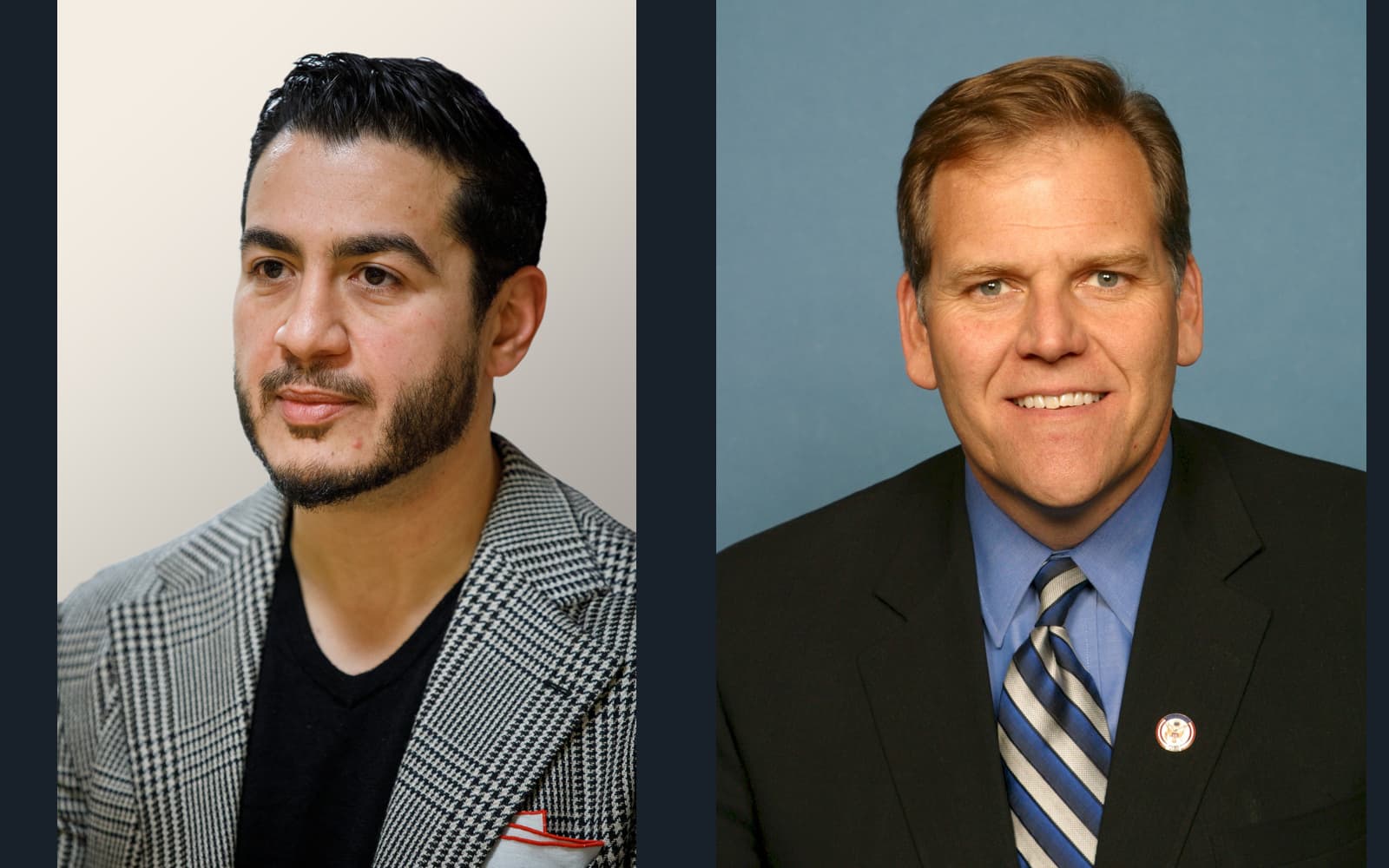
*Archive photographs; not October 27, 2026 events. El-Sayed: February 3, 2025. Rogers: official 113th Congress portrait; capture date unspecified. Kenneth C. Zirkel / Wikimedia Commons, CC BY-SA 4.0 (https://creativecommons.org/licenses/by-sa/4.0/); source: https://commons.wikimedia.org/wiki/File:Abdul_El-Sayed.jpg; United States Congress / Wikimedia Commons, Public domain (https://commons.wikimedia.org/wiki/Template:PD-USGov-Congress); source: https://commons.wikimedia.org/wiki/File:Mike-Rogers-Head-Shot-2_(3x4_cropped).jpg. Side-by-side layout/resizing by NewsCubby. Composite and cards shared under CC BY-SA 4.0. No endorsement implied.*
*NewsCubby articles are produced with AI assistance and reviewed by humans.*
Sources, credits & editorial notes
- Melissa Nann Burke and Grant Schwab, The Detroit News via AOL, October 27
- Marist Michigan poll release, October 21
- Abdul El-Sayed official campaign priorities
- El-Sayed healthcare platform
- Mike Rogers official campaign priorities
- Rogers housing platform
- Michigan secretary of state, early in-person voting
- Michigan secretary of state, absentee voting
- Glengariff Group, published nonpartisan philosophy
- Photo: Kenneth C. Zirkel; CC BY-SA 4.0
- Photo: United States Congress; Public domain